


Issues that affect your business within your community may be more widespread than you think. Get Involved.

Tariffs, Trade Wars, and the Auto Industry: The Elephant in the Room
“A year ago, we asked how tariffs might affect our industry. Today we have a clearer answer…”
It's been just under two years since Trump's tariffs on Canadian products went into effect. Then, shortly after, tariffs were also levied on nearly all US foreign trading partners.
How are you doing?

How badly will this trade war affect me and my small shop?
The answer: I'm not sure because there are many moving parts to this mess before it finally reaches us. But it will reach us quickly—it always does.
What we can be certain of is that our costs for parts and products will increase, and we'll have to pass this on to our customers. This will undoubtedly impact the add-on services, particularly for our customers with smaller budgets.
You may think that these Trump tariffs will only be paid by U.S. customers buying Canadian goods, and you are correct, for the most part. By simple design, the tariffs are intended to make our exported products less attractive by price and to encourage US customers to buy Made-In-America products.
Other than those legislated by Canada, all US products coming into Canada are not taxed, and all Canadian products exported to the US will be taxed.
But, here's where it gets tricky;
- All products produced here but destined for US assembly, packaging, or processing are also taxed, even if they are entirely destined for Canadian markets.
- All American products that require imported parts for assemblies will be taxed on the imported parts.
There's no getting around it. The price of most products we purchase will increase.
However, there is a bright side.
All products produced here in Canada and destined for our Canadian markets will not be affected by tariffs.
So, the answer would seem to be "Buy Canadian".
Yes, I wholeheartedly agree.....while you still can.
I say "while you still can" because a growing problem will profoundly affect our Canadian manufacturers.
There's a problem brewing.
When Canada entered the North American Free Trade Agreement (NAFTA) in 1994, which lifted all tariffs and was subsequently replaced with the United States-Mexico-Canada Agreement (USMCA) in 2020, our Canadian manufacturers began focusing heavily on US markets so much so that they became complacent about their local and regional markets here at home.
On the front line of this industry, we recognized this through the absence of factory field representatives, local market engagement, and support. As a direct result, the reasons for maintaining brand loyalty were deminished. Our product choices had changed to 'price and availability'.
This weakened the Canadian markets for our Canadian manufacturers. Since Canadian producers no longer secured local markets, foreign suppliers could fill the gap, further weakening the marketplace.
Now, we get blindsided by Trump's tariffs.
That means the tap for the US markets was turned off, which seriously affected not only our Canadian manufacturers, but our US counterparts who have depended on us.
Given the evidence and facts, it doesn't look promising if the tariffs stay in place for any length of time. I don't know how many can quickly adapt to the storm without the US markets and weak Canadian market shares.
Our U.S. Relatives
Yes, there is significant turmoil in the US political arena, with stock markets fluctuating wildly and a potential recession looming, all created by one person, Donald J. Trump. We have no idea what the near future will bring. But can we afford to wait and see?
Yes, I consider the automotive aftermarket south of our border, our extended family, because we have always shared and depended on each other for so much. So, we certainly cannot get mad at them for any of this, because they are going through far worse than we will experience. We're already seeing this, with the loss of their trading partners, their economy crashing, extensive layoffs, and, soon, many business closures. I can't see much light at the end of the tunnel for them.
Trump's plan is definitely backfiring.
A Way Out
What did we do, here in Canada, before NAFTA?
Every manufacturer had an army of field representatives whose job was to build and manage local markets. They brought with them all the tools and resources needed to provide factory support to local installers, dealers, and distributors. This was a relationship, not advertising, and it was this relationship that served as the marketing foundation for manufacturers to secure their strengths in the Canadian marketplace.
That era may be gone, but the lessons we learned hold the answers to not only surviving this storm, but coming out the other end stronger and more secure.
The solution is a 'grassroots' one: reengaging with individual commercial customers in their local markets to rebuild relationships. Show your support by listening and solving issues. Give them the resources they need, and improve customer service programs. Since 'Buy Canadian' is now at the forefront, commercial customers are more apt to support our home manufacturers, especially those who are willing to work for them.
This can be done through IT, without hiring armies of representatives.
Every effort is a step in the right direction, and here at ASBN, we will do our part to make this effort a reality for this region of BC.
This may not be a total solution to the problem, but it will help them survive this storm. Plus, they will be even more secure in their local and regional markets when these tariffs are finally lifted.
Can we improve on that concept? Of course, we can. However, that would require a more national and collaborative approach, which is a topic for another discussion.
As it stands, I don't think we would even notice if some of our long-standing manufacturers had to close their doors forever, and that's a shame.
Bob Paff
Editor, ASBN Publications
New Westminster, BC
"Connecting Our Industry Together"

Ethanol-Blended Fuels Hurting the Environment
Environmental groups and our government told us that the reasons for legislating Ethanol in Gasoline were;
1. To improve the air quality and combat climate change
2. To reduce our dependency on non-renewable fossil fuels
Well, it's not working.
Major Update!
With what's been happening in the last few months, our manufacturing industry has been turned upside down. Trump's tariffs have made a real mess. His thought of protecting US manufacturers from outside influencers has totally backfired. US manufacturers can no longer afford to stay in the US, affecting all supply chains, including ours. I was going to replace this article with one reflecting current events with current solutions, but I thought better of it. We must understand our issues before the tariffs, so they are included in ASBN's solutions.
Read on.
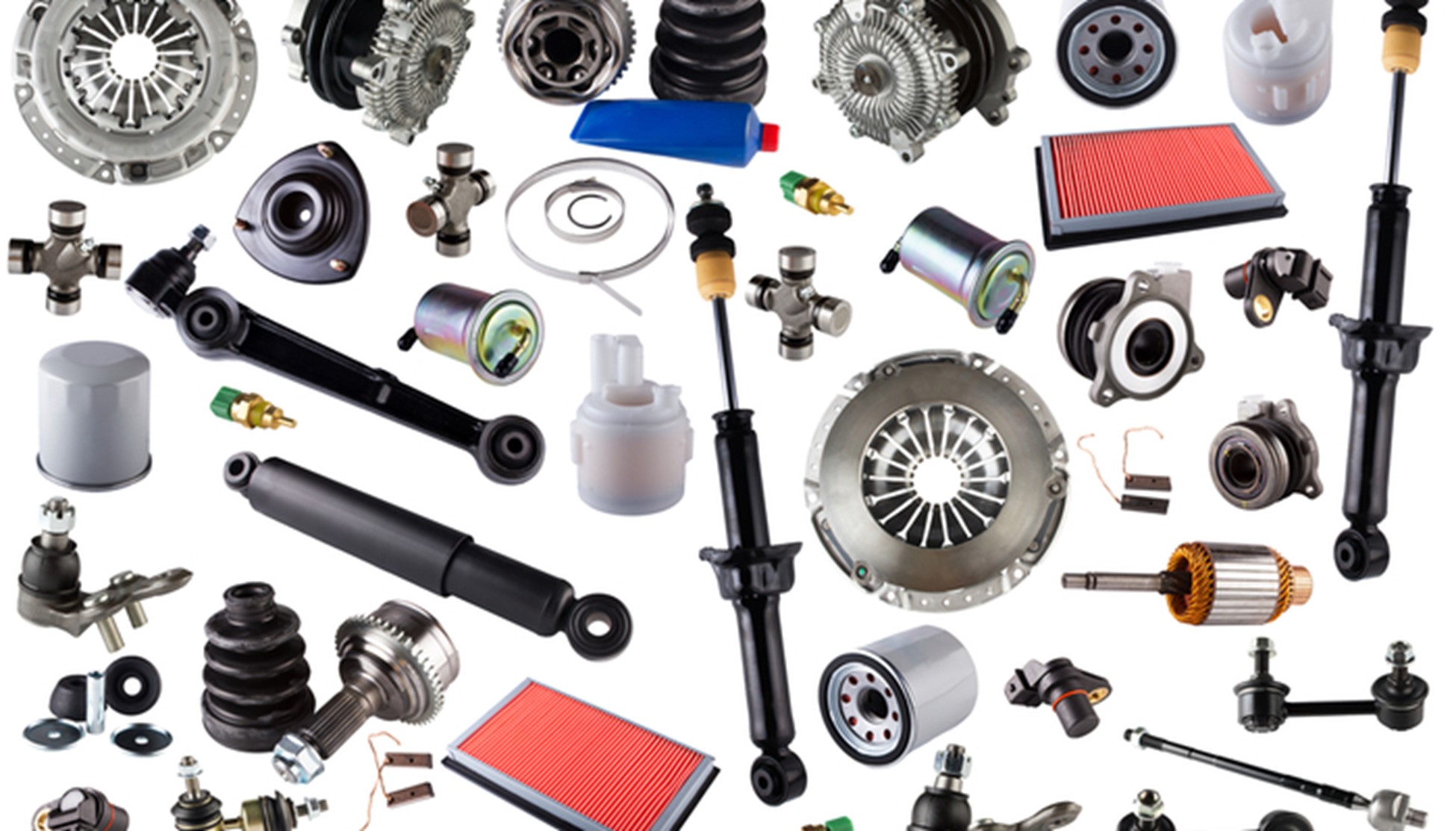
On the front line, we’ve always complained about cheap offshore parts.
Then, too, who cares anymore? A part is a part. So cheaper is better, right?
Oh really?

Did you know that;
- In BC, anybody with tools can call themselves a Mechanic or even a Technician.
- Some tire manufacturers have reduced tread widths to save money but compromise safety.
- "Meets O.E.M. specs" has everything about 'fit' and nothing to do about quality.
- You are held legally responsible if a part fails and causes an accident and/or injuries.
- We used to be on guard for cheap, counterfeit parts trying to infiltrate our markets, and now they are mainstream?
More Articles …
Page 1 of 4
 How to resolve AdBlock issue?